Next intake · 1 month

Master Python and SQL in one month.

An intensive short course built around instructor-led classes, hands-on exercises and real-world projects — designed to fit around a full-time job.

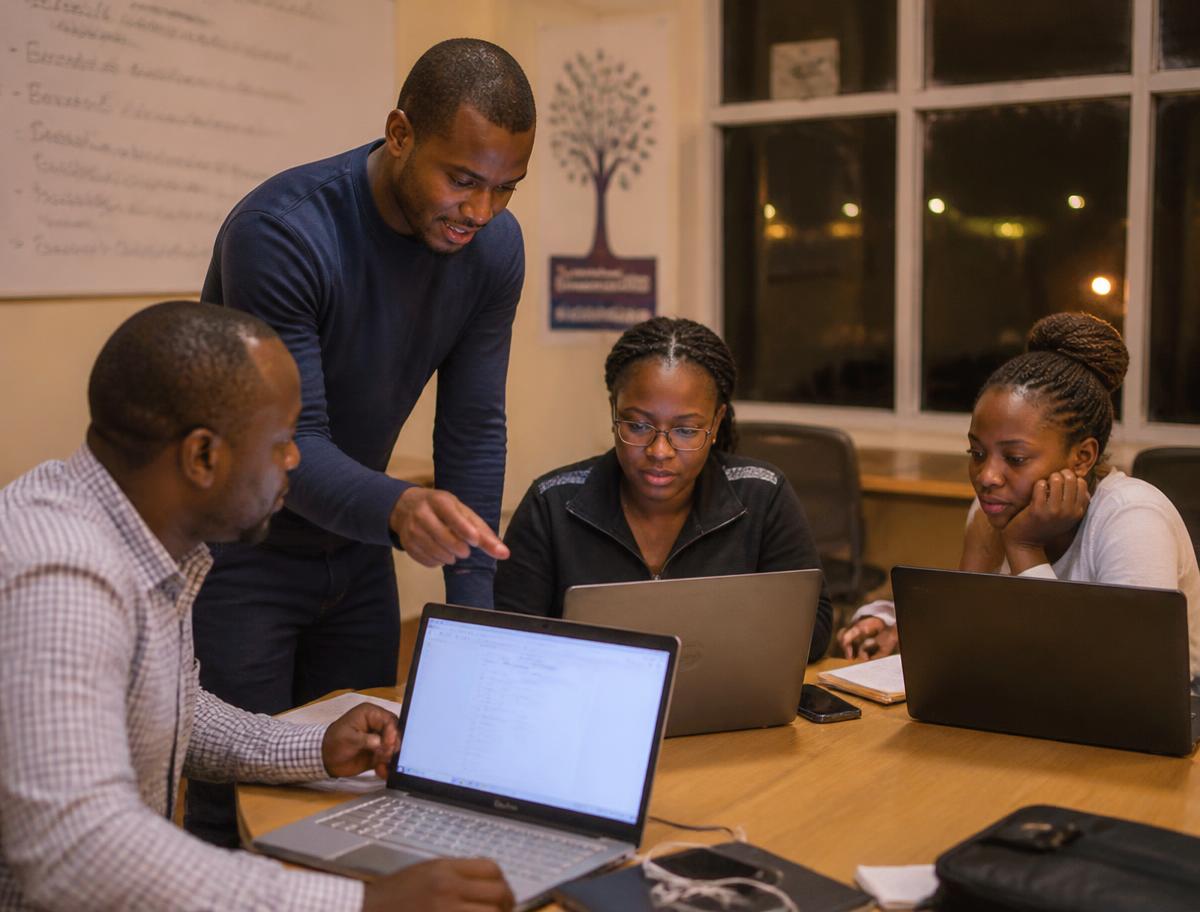
A mentor guiding a small group of learners with laptops during an evening class

Short course fee

KES 4,900

Python and SQL, one month

Fully redeemable — if you later join a full NgaziTech cohort track, the 4,900 KES is credited against your programme fees.

  • 1 month
  • 2 hours per session
  • Instructor-led
  • Practical projects

Choose your class time.

You attend one time slot — not all three. Each tool runs twice a week, two hours per class.

Early morning

5:00 – 7:00 AM EAT

Before the commute

Daytime

10:00 AM – 12:00 PM EAT

Flexible schedules

Evening

7:30 – 9:30 PM EAT

After work

Take Python, SQL, or both.

Practical foundations designed for real data work.

Python short course

Build a strong Python foundation for data work through hands-on programming, data manipulation, automation and APIs.

  • Rung 1 — Setting up: Python, notebooks and a workflow you can repeat
  • Rung 2 — Values, variables and the errors beginners actually hit
  • Rung 3 — Collections: lists, dictionaries, sets and when each one fits
  • Rung 4 — Decisions and repetition without copy-paste code
  • Rung 5 — Writing functions you can reuse across a report
  • Rung 6 — Reading and writing files: CSV, Excel exports and JSON
  • Rung 7 — pandas: loading a messy real dataset and understanding it
  • Rung 8 — Cleaning, reshaping and joining tables in pandas
  • Rung 9 — Pulling data from an API and handling what comes back
  • Rung 10 — Automating a weekly reporting task end to end
  • Final rung — Your own mini project, reviewed and written up

SQL short course

Work confidently with relational databases and use SQL to retrieve, clean, analyse and transform data.

  • Rung 1 — How relational databases store the data you report on
  • Rung 2 — Your first queries: SELECT, filtering and sorting sensibly
  • Rung 3 — Counting, summing and grouping without double-counting
  • Rung 4 — Combining tables: inner, left and the joins people get wrong
  • Rung 5 — Conditional logic with CASE for banding and categorising
  • Rung 6 — Subqueries and CTEs to keep long queries readable
  • Rung 7 — Window functions: running totals, ranks and period comparisons
  • Rung 8 — Dates, text and the cleaning you do before analysis
  • Rung 9 — Reading a schema and designing a simple, sane table structure
  • Rung 10 — Working day to day in PostgreSQL with DBeaver
  • Final rung — Answering a real business question, query by query

Who this is for

  • Complete beginners
  • University students
  • Working professionals
  • Aspiring data analysts
  • Aspiring data scientists
  • Aspiring data engineers
  • Anyone who needs Python or SQL at work
  • Learners preparing for the next full cohort

Looking for the full track? Data, AI and engineering cohorts run alongside the short courses.

View full programmes